Best Argos Home Workout Equipment for Different Fitness Goals
Working out at home tends to start in a fairly simple way. One day you are doing a quick session on the living room rug with a YouTube video on in the background, and before long you are wondering whether a proper mat, a set of weights or even an exercise bike might make the whole thing easier. That is really the appeal of home fitness. It does not have to begin with a full gym set-up or some grand plan to transform the spare room. Often it starts with one or two small changes that make it easier to be consistent. Argos is one of those retailers that works well for this sort of shopping because the range covers both ends of the scale. You can pick up simple accessories for shorter sessions, or look at bigger equipment if you want to take things further. And if you want to see whether any current offers are available before you buy, it is worth checking our main Argos discount codes page first.
Building a Home Gym Around Your Space
Cardio Machines for Regular Home Workouts
For plenty of people, cardio equipment is the first thing that comes to mind when they picture a home gym. Treadmills, exercise bikes, cross trainers and rowing machines all have their place, and the right one usually comes down to what kind of training you actually enjoy enough to stick with. That is the important bit. There is no point buying a treadmill because it looks impressive if what you really like is cycling. Equally, a rowing machine might sound like a brilliant all-body option, but if you only use it twice and then start hanging washing on it, it has probably not earned its keep.
The useful thing about shopping for this kind of kit at Argos is that there is usually a fairly broad spread. You will often see more compact machines alongside larger models, which makes it easier to match your choice to the room you have available rather than to some ideal version of a home gym that only exists in your head. Some people want a treadmill they can jump on before work. Others just want an exercise bike they can use a few evenings a week while watching television. Both are valid. The point is to choose something that fits real life.
Choosing Equipment That Fits Smaller Spaces
Not everyone has a garage to convert or a dedicated room they can turn into a workout zone. In reality, home exercise often happens in corners of bedrooms, in the dining room once the chairs have been moved, or in that bit of the lounge where you hope nobody trips over your mat. That is why size matters more than people sometimes admit. A piece of equipment can look great online, but if it dominates the room or is too awkward to move, it quickly becomes a nuisance.
This is where it can be better to scale things back and think practically. A foldable treadmill, a compact bike or even a smaller strength set-up can make much more sense than trying to recreate a full gym at home. There is something slightly liberating about accepting that you do not need everything. One good piece of equipment you use regularly is far more valuable than a huge set-up that feels like a burden before you have even started.
Start with One Main Piece of Equipment
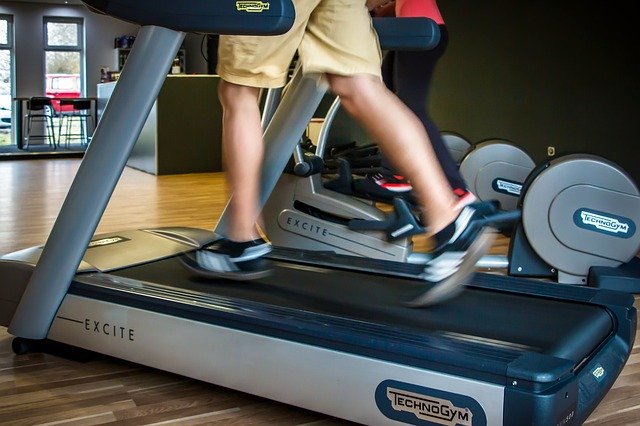
A lot of people make the mistake of thinking they need to buy everything at once. Bike, bench, weights, mat, bands, watch, bottle, storage rack – suddenly the whole thing gets expensive and slightly ridiculous. Starting with one main piece of equipment is often the smarter move. It gives you something to build around and lets you see what kind of home training you actually enjoy before you spend more money.
That might be an exercise bike if you like lower-impact cardio. It might be a treadmill if walking or running is more your thing. Or maybe it is not a machine at all. Sometimes a simple set of weights ends up being the purchase that gets the most use because it is so easy to fit into the week. There is no rule saying a home gym has to arrive fully formed.
Affordable Fitness Equipment for Everyday Home Exercise
Dumbbells, Kettlebells and Resistance Basics
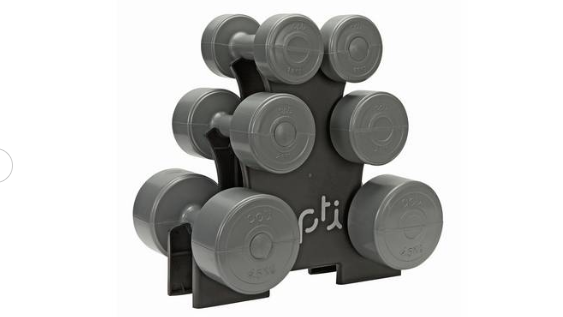
Smaller fitness equipment is often where home workouts become more realistic. Not everyone wants a large machine in the house, but a decent set of dumbbells or a kettlebell is much easier to justify. They do not take over the room, they work across a lot of different exercises, and they are ideal for building short sessions around if you are trying to fit training into a busy day.
Dumbbells are particularly useful because they allow you to start small and build up gradually. That matters when you are working out at home without anyone there to correct your form or tell you when you have bitten off more than you can manage. Kettlebells bring a slightly different feel. They are brilliant for full-body movements, conditioning work and workouts that feel a bit more dynamic, but they can also be surprisingly humbling if you go too heavy too soon. Better to start with something manageable and actually use it than buy the sort of weight that sits untouched under a chair.
Equipment for Core, Strength and Conditioning Sessions
One of the better things about training at home is that you do not need much to create a solid session. A medicine ball, skipping rope, resistance band or gym ball can all earn their place, and often at a lower cost than people expect. That makes them a good option for anyone trying to improve general fitness without turning the house into a fitness showroom.
Medicine balls are especially handy if you want to add a bit more challenge to core work or bodyweight training. Skipping ropes are good for shorter bursts of cardio when you do not have time for a full session. Gym balls can be useful too, though they do require a bit of floor space and sometimes a little patience. The best smaller pieces of equipment are usually the ones that make it easier to start, not the ones that look clever but end up being more hassle than help.
Good Options for Beginners Starting at Home
Starting at home can feel oddly exposed. There is no class to follow, no instructor telling you what comes next, and no gym environment nudging you into workout mode. That is why simpler kit can work so well for beginners. A mat, a pair of dumbbells and maybe one or two accessories are often enough to get going without making it all feel too serious too soon.
There is also less pressure when the set-up is straightforward. You can try a few things, see what you enjoy and build from there. Some people discover they love strength sessions. Others find they would rather do brisk cardio and leave the weights alone. Better to learn that with a few well-chosen items than after spending far too much on equipment that never really suited you in the first place.
Fitness Accessories That Make Home Workouts Easier
Exercise Mats and Comfort Essentials
A decent mat seems like a small thing until you try doing stretches, floor work or planks without one. Then it suddenly feels essential. Mats are useful for far more than yoga. They make floor-based exercises more comfortable, help with grip, and can turn even a basic bit of carpet or laminate into a more practical training space.
It is the sort of purchase people sometimes skip because it feels non-essential compared with weights or a machine. In practice, though, the small comfort items can be what make you more likely to keep going. If your knees hurt every time you kneel down for a core session, or the floor feels too slippery for certain movements, you will notice it quickly.
Towels, Bottles and Small Workout Extras
There is also a whole category of smaller extras that tend not to get much attention until you realise they would make your routine less irritating. A proper water bottle. Gym gloves. A microfibre towel that actually dries quickly. None of these are dramatic purchases, but they can still improve the experience in small, useful ways.
That is often how routines stick, really. Not through huge moments of motivation, but through removing bits of friction. If you have what you need to hand, your space is set up properly and your equipment is easy to use, it all becomes easier to repeat. That matters more than people like to admit.
The Small Add-Ons That Help You Stick with It
Sometimes the thing that helps most is not the big purchase at all. It is the practical extra that makes the session easier to start. A mat already rolled out. A towel where you need it. A storage spot for weights so they do not become a tripping hazard. The glamorous side of fitness gets plenty of attention, but home workouts are often held together by much less exciting details.
And that is fine. You do not need every purchase to feel transformative. Sometimes it just needs to make life slightly easier.
Wearable Tech and Tracking Tools
Fitness Watches and Activity Trackers
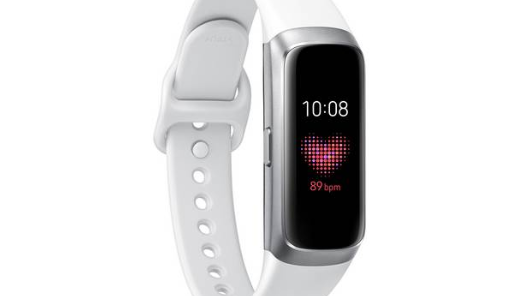
Wearable tech has become a fairly normal part of exercise for a lot of people now. Some use it to keep an eye on heart rate or calorie burn. Others just like having a record of how often they are moving. It can be surprisingly motivating to see your steps creeping up or to notice that you have trained three times in a week when, in your head, it felt like you had done very little.
Argos tends to have a good range here too, from simple activity trackers to more feature-heavy smartwatches. Not everyone needs the most advanced option. In fact, plenty of people are happier with something straightforward that tracks the basics well and does not bombard them with stats they never intended to look at in the first place.
Choosing Tech That Matches Your Routine
This is one area where it helps to be realistic. If your goal is to walk more, do a few home sessions each week and keep a rough eye on progress, you probably do not need the same watch as someone training for an event. If you are more serious about running, cycling or structured fitness goals, then it may be worth looking at something with more detailed tracking.
The best tech is the kind that fits into your routine without becoming another thing to manage. If it motivates you, gives useful feedback and helps you stay accountable, then it is doing its job. If it leaves you feeling guilty every time it buzzes, maybe not so much.
Motivation, Progress and Accountability
Home workouts can feel slightly invisible. You do them, of course, but because you are not going anywhere to train, they can blur into the rest of the week. That is one reason tracking tools can help. They give your efforts a bit more shape. You can see what you have done. You can spot progress. And sometimes that is enough to keep the momentum going when enthusiasm dips.
It does not have to be complicated. A simple tracker, used properly, can be more helpful than a high-end device you barely understand.
How to Choose the Right Fitness Equipment for Your Goals
Think About How You Actually Like to Exercise
There is a temptation to buy equipment based on the workout version of yourself you would like to become, rather than the one you are. But if you hate running, a treadmill is not going to turn into a good purchase through optimism alone. It is better to start with what you naturally gravitate towards. Strength work, cardio, mobility, shorter HIIT sessions, lower-impact training – there are different routes into home fitness, and none of them is more valid than the others.
If you enjoy variety, smaller kit might suit you better. If you prefer structure, a cardio machine might make sense. The trick is not to chase someone else’s routine. It is to build one you will actually keep turning up for.
Be Realistic About Space and Storage
This sounds obvious, but it is amazing how easy it is to ignore the practical side when something is on offer or looks appealing online. Before buying, it is worth asking where it will go, how often it will be used, and whether you can realistically live with it in the room where it needs to sit.
Bulky equipment can be brilliant if you have the room. If you do not, it can become an obstacle in every sense. Smaller homes usually benefit from more flexible choices: compact weights, foldable equipment, or accessories that tuck away easily once you are done.
Start Simple and Build Gradually
There is nothing wrong with beginning with the basics. In fact, that is usually the better route. One or two pieces of equipment that suit your routine are often enough to get things moving. Then, once the habit is there, you can build on it with more confidence.
That way, every purchase has a reason behind it. You are not buying for the sake of it. You are adding something because it fills a gap, supports the way you train or makes the next step easier. That tends to lead to a much better set-up in the long run.
Our Final Take on Buying Home Workout Equipment at Argos
Argos is a useful place to look for home fitness equipment because the range tends to cover more than one type of shopper. If you are just trying to exercise a bit more at home, there are simple, affordable options that help you get started without overcomplicating things. If you are ready to build a more complete set-up, there is enough variety to do that too.
The real advantage is flexibility. You can start with a mat and a few weights, or go further with cardio equipment, accessories and wearable tech depending on what suits your routine. And before you buy, it is always worth checking our latest Argos discount codes to see whether any current fitness offers are available.
by Julian House 24th March 2025

Enter to Win 1 of 6 × £50 Greggs Gift Cards
Complete the form below to enter. One entry per person. No purchase necessary.
Advertisement
Advertisement
Charity Donation
Thank You!
You've Helped Us Raise
£0.00
For Charities Since 2012
This Weeks Most Popular Blog Articles
There are few better times to tackle that growing list of household jobs than when the Black Friday...
If you're thinking about straightening your teeth, you've probably come across Invisalign. It's one...
If you're thinking about having your teeth whitened professionally, one of the first things you'll...
If you're thinking about straightening your teeth without traditional braces, clear aligners are...
Customer appreciation is rarely about grand gestures. More often, it shows up in the small,...
This Month's Charity
Brook Farm Animal Sanctuary
£182.39 Donated This Month
Total Raised for Charities Since 2012: £88,801.00
Thanks to our loyal users, we’re supporting Ray of Light Wales Charity. Keep using our voucher codes to help us give even more.