How UK Consumers Separate Genuine Offers From Clever Marketing
If you have ever hunted for deals online, you’ve likely found a few good ones – even several great ones – but have also experienced another familiar scenario: an offer that looked great at first glance, clicked through to find the steps to redeem it and then discovered a catch. Usually, it’s something like a minimum spend that wasn’t communicated in the banner, or the fact that the discount only applies to select products, expires sooner than you’d like or comes with limits that make the offer less valuable.
The more UK consumers have been exposed to these experiences, the more they’ve become sceptical of deals, especially ones labelled ‘free’. UK consumers have learned that promises often come with a few strings attached. While the offer itself may be legitimate, the reality doesn’t always match the impression created through marketing. But that scepticism hasn’t been strong enough to make them dismiss promotions altogether.
Some of the best savings available online still come from introductory offers, limited-time promotions and voucher codes. The trick is knowing how to pick out ones that deliver real value from those that rely on the fine print to reshape the deal. How? Let’s take a deep dive into how experienced deal hunters judge an offer.
The Hallmarks of a ‘No Strings’ Deal
Finding a no-strings offer is much simpler than people realise. At its core, the value advertised should be the value you actually receive. There shouldn’t be hidden spending thresholds or conditions that dramatically change the terms of the offer once you claim it. That’s not to say a coupon can’t have terms or conditions, or that every single clause is a red flag. In fact, most promotions have basic rules around eligibility, expiry dates or how an offer can be redeemed. As long as they help administer the promotion, they are unlikely to come as an unpleasant surprise.
A good rule of thumb when evaluating any deal is to ask whether the headline still holds up after reading the terms. A retailer advertising ‘£20 off your next order’ can sound generous until you discover it only applies to purchases over £150. Likewise, a free trial that automatically converts into a paid subscription comes with a commitment that’s easy to overlook.
Experienced deal hunters know exactly what phrases to pay attention to. Requirements like ‘minimum spend’, ‘qualifying purchase’ or ‘subject to additional conditions’ don’t make an offer necessarily bad, but they are typically the first place to investigate further. The best no-strings offers tend to be easiest to explain and understand, with clear value and straightforward conditions.
Why Digital Offers Come With More Moving Parts
Whether the offer is digital or traditional, hidden conditions are rarely the exception, but they tend to appear more frequently online. One reason is that digital promotions are easier to structure around systems and flows. Brands can add conditions that sit behind the headline offer without interrupting the experience too much. In contrast, physical retail offers are usually immediate and “flat”: you show a voucher, get a discount at the till and that’s it. Online, there can be several additional steps between seeing an offer and getting value out of it. An offer could be tied to your account status, controlled through code logic rather than an upfront rule or depend on automation rules that can’t be bypassed.
The way digital offers are presented also plays a role in why important details go unnoticed. Consumers often make quick decisions while they browse websites, scroll through apps or compare prices. Only a handful of people stop to read every condition to every promotion, which makes it easier for brands to structure offers in ways that depend on overlooked conditions. None of this means consumers are careless or that brands deliberately try to pull the wool over customers’ eyes. Digital environments are designed to make offers highly visible and easy to claim, not to encourage the kind of scrutiny that might give you pause.
Where the Line Between Marketing and Value Is Easiest to See
Digital promotional offers are used to attract attention and prompt first-time engagement. On the surface, many of these offers may look similar because they’re all trying to do the same job. Brands also have a very limited amount of headline space to work with, so all offers typically get compressed into the same simple formats. As well, familiarity makes people more likely to engage. The difference between all these rewards only becomes clear once you look at what needs to happen before any value can be realised.
The distinction between a standard promotion and a true no-strings offer lies in its conditions, and whether those conditions meaningfully change the offer in practice. One of the clearest examples of that in any digital category is no-wagering free spins – a type of online promotion where the winnings are entirely yours to keep without having to bet them multiple times to unlock them.
As explained by CasinoHawks, the difference between a standard free spins offer and a no-wagering one illustrates the difference between a promotion that merely seems generous and one that actually is. Standard free spins offers often look enticing upfront, but the winnings are usually locked behind strict, and often unachievable, wagering requirements. Once you see that difference in practice, it becomes easier to spot similar structures across other digital promotions.
How to Size Up Any Digital Offer
When you’re scouring digital offers, the goal isn’t to memorise every rule for every category. Often, there aren’t really separate rules at all – just different versions of the same basic conditions. If you strive to become an excellent deal hunter, you’ll need to build a simple way of checking what affects value before you commit. Most promotions, as we’ve mentioned, tend to follow the same underlying structure once you know what to look for.
Check the Threshold
Look for a minimum spend or action required before the offer applies. Many discounts only activate above a certain basket size or kick in only after you reach a threshold.
Check the Cap
Some offers are limited by a maximum value. Maybe Deliveroo is offering a 50% discount, but it only applies it up to a certain amount (such as £15). In these cases, a strong headline can narrow down the real benefit.
Check the Timing
Short validity periods can make it hard to redeem offers, as you may need to make decisions quickly or risk losing the benefit altogether. Some promotions only become available after you complete extra steps, which can make the deal less flexible and more conditional than initially suggested.
Check How Value Is Released
Find out when and how you’ll receive the benefit. If the value is delayed or conditional, it can change the experience of the offer. Sometimes, you won’t see a benefit for a long time, potentially long after the initial purchase or sign-up.
Finding Offers You Don’t Need to Second-Guess
The reality is that genuine no-string offers do exist. While some brands release promotions that are designed to hide complexity or target less vigilant customers, others are built to be straightforward from the start, without hidden thresholds or extra steps. The way a platform approaches its audience can be a strong hint. Providers that care about long-term trust over short-term conversions are usually the most trustworthy and will prove that in the simplicity of their offers and overall marketing transparency.
Consumers shouldn’t get caught up in chasing every promotion and focus more on recognising which ones are worth their attention. The more familiar you become with how conditions are structured, the easier it will be to spot them across the board, in all industries.
Written by Julian House on 23rd June 2026
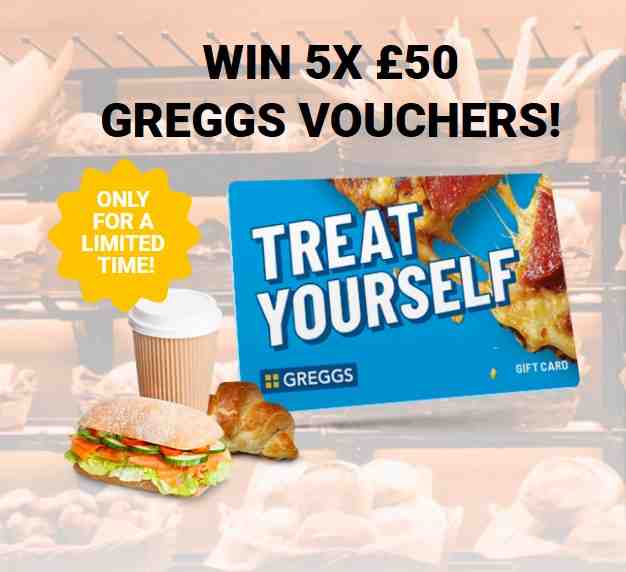
Enter to Win 1 of 6 × £50 Greggs Gift Cards
Complete the form below to enter. One entry per person. No purchase necessary.
Advertisement
Advertisement
Charity Donation
Thank You!
You've Helped Us Raise
£0.00
For Charities Since 2012
This Weeks Most Popular Blog Articles
Lookfantastic has released four quite different Advent calendars for Christmas 2026. There is a...
The Ninja SLUSHi Twist makes an impressive first impression: two frozen drinks, two flavours and...
If both Stena Line and Irish Ferries work for the journey you are planning, the discounts can make...
The best time to book Stena Line is usually once your travel dates are reasonably firm, rather than...
Wedding planning often involves comparing prices, working out where to save and deciding which...
This Month's Charity
Brook Farm Animal Sanctuary
£179.34 Donated This Month
Total Raised for Charities Since 2012: £88,475.84
Thanks to our loyal users, we’re supporting RSVP Charity. Keep using our voucher codes to help us give even more.