
P&O Ferries vs DFDS: Why These Two Operators Get Compared So Often
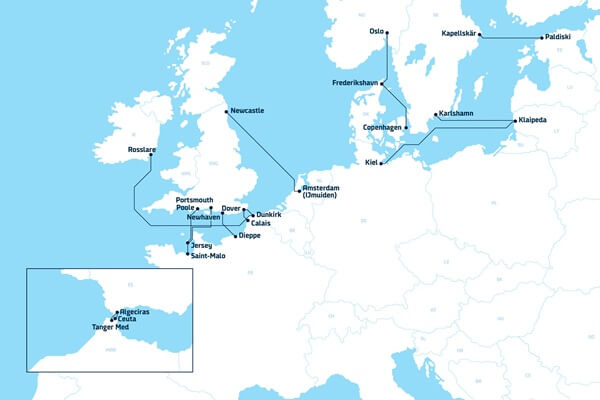
When I compared P&O Ferries and DFDS, it was clear to me that the route usually makes the first decision. Both operators sail between Dover and Calais, but their wider networks are different. DFDS also offers Dover to Dunkirk, Newhaven to Dieppe and Newcastle to Amsterdam, while P&O Ferries operates Hull to Rotterdam and Cairnryan to Larne alongside its Dover service.
Where the routes overlap, I would not choose from the first fare shown. The full booking can change once the vehicle, passengers, ticket flexibility, cabin, lounge, pet arrangements and onward drive are included. I have found that a slightly higher ferry fare can still make sense if the arrival port shortens the road journey or the ticket gives you better amendment rights.
This comparison looks at the areas that matter most when booking: routes, pricing behaviour, ticket flexibility, onboard facilities, car travel and current saving routes. I have not tried to name one universal winner because the better operator depends on the crossing you actually need.
Overview of P&O Ferries and DFDS at a Glance
P&O Ferries and DFDS are often compared because both carry cars between the UK and mainland Europe, but they do not serve identical journeys.
When I checked the current passenger networks, P&O Ferries listed Dover–Calais, Hull–Rotterdam and Cairnryan–Larne. DFDS listed Dover–Calais, Dover–Dunkirk, Newhaven–Dieppe and Newcastle–Amsterdam among its main UK passenger routes. You can check the operators’ current route information on the P&O Ferries routes page and the DFDS passenger ferry page.
The direct like-for-like comparison is therefore Dover to Calais. Elsewhere, the decision is more about which departure and arrival ports fit the complete trip.
- P&O Ferries: Useful when Dover–Calais, Hull–Rotterdam or Cairnryan–Larne fits the road journey.
- DFDS: Useful when Dunkirk, Dieppe or an overnight Newcastle–Amsterdam crossing reduces the driving required.
- Both operators: Carry cars and offer route-dependent food, lounges, pet arrangements and flexible ticket options.
P&O Ferries vs DFDS Route Coverage
Route geography matters more than brand preference. I have found that choosing the right port can save more time than choosing the lowest ferry fare.
Dover to Calais
This is the main direct overlap. Both P&O Ferries and DFDS operate the route, so it is the best place to compare sailing times, complete fares and ticket conditions on a like-for-like basis.
P&O says its Dover–Calais schedule can include up to 11 daily sailings, although timetables vary by date and demand. DFDS also runs regular Dover–Calais services, with published timetables changing according to the travel week. I would compare the actual departure window rather than rely on a general frequency claim.
Dover to Dunkirk
DFDS offers Dover–Dunkirk as an alternative to Calais. The crossing takes longer than Dover–Calais, but Dunkirk can be better placed for parts of Belgium, the Netherlands and northern France.
When I compare these routes, I include the onward drive. A cheaper Calais fare can lose its advantage if Dunkirk removes enough road miles, fuel and motorway time.
Newhaven to Dieppe
DFDS operates Newhaven–Dieppe. This can suit travellers starting in southern England or heading towards Normandy, Brittany or western France. It may avoid the drive to Dover, although the ferry crossing itself is longer.
I would compare the door-to-door journey rather than just the time at sea. The most convenient port can change according to where the trip begins and ends.
Hull to Rotterdam
P&O Ferries operates Hull–Rotterdam as an overnight route. This is important because it means P&O should not be treated only as a short-crossing operator.
The crossing is built around cabins and an overnight journey. For drivers from northern England, Scotland or parts of the Midlands, it may remove a long drive south before reaching the Channel.
Newcastle to Amsterdam
DFDS operates Newcastle–Amsterdam as an overnight route. Economy, sea-view and pet-friendly cabins are available, with the exact accommodation depending on the ship and booking.
When I checked the route, it was clear that the value is not just the ferry ticket. The comparison should include the cabin, meals and the road distance saved by sailing from the north-east.
Cairnryan to Larne
P&O Ferries operates Cairnryan–Larne for travel between Scotland and Northern Ireland. DFDS does not offer a directly comparable UK passenger route, so this is usually a P&O decision rather than an operator comparison.
How P&O Ferries and DFDS Prices Behave
There is no dependable rule that P&O Ferries is always cheaper than DFDS, or the other way around. When I check ferry fares, the total changes according to the route, date, sailing, demand, vehicle and ticket type.
To make the comparison fair, I would enter the same details with both operators:
- outbound and return dates;
- preferred sailing window;
- number and ages of passengers;
- vehicle type and accurate dimensions;
- roof box, bicycle rack, trailer or caravan;
- pets;
- ticket flexibility;
- cabin or lounge access; and
- priority boarding or other extras.
The first figure on a route page may be based on a particular vehicle, passenger count, cabin occupancy or travel period. I would use it as an indication only and judge the price shown for the actual booking.
It is also sensible to price the onward drive. Calais, Dunkirk, Dieppe, Rotterdam and Amsterdam lead to different motorway routes. Fuel, tolls and an extra hotel night can outweigh a small difference in the ferry fare.
P&O Ferries and DFDS Ticket Flexibility Compared
The word “flexible” does not mean exactly the same thing with every operator or route. When I checked the available ticket information, I found that the important questions were whether the fare is refundable, whether amendment fees apply and how far from the booked sailing you may travel.
P&O Ferries ticket options
P&O route pages describe Standard, Standard Flexi and Fully Flexi tickets. The precise terms can vary, but Standard fares may charge for amendments and can be non-refundable. Standard Flexi provides more booking flexibility, while Fully Flexi is intended for passengers who need the broadest departure and refund options.
For example, P&O’s published Calais–Dover information says a Standard ticket can permit travel within four hours either side of the booked departure, subject to availability, while still being non-refundable and subject to amendment charges. Fully Flexi information for Cairnryan–Larne states that passengers can travel on another departure subject to availability, with no amendment fee when the booking details and duration remain the same, and the ticket is refundable.
DFDS ticket options
DFDS uses route-specific ticket categories. On Dover–France routes, Economy is the lower-flexibility option, while Premium gives wider flexibility and additional benefits. The operator’s published terms should be checked for the selected route because amendment, cancellation and travel-window rules can differ.
I would not pay more for flexibility automatically. It is useful when arrival time is uncertain, plans may change or missing a sailing would create a large extra cost. For a fixed trip with plenty of check-in time, the cheaper fare may still be the better fit.
Onboard Experience: Short Crossings and Overnight Routes
The onboard comparison changes with the route. A Dover crossing and a North Sea overnight sailing are different travel products, even when the operator name is the same.
Dover and short-route facilities
On Dover–Calais, P&O Ferries offers route-dependent food outlets, a Club Lounge, priority boarding and a Pet Lounge. Its Pet Lounge includes seating, Wi-Fi, charging points and drinks for passengers travelling with dogs. Current facilities and charges should be confirmed during booking.
DFDS offers food, seating, a Premium Lounge and priority boarding on its Dover–France routes. Its Premium Lounge includes drinks, snacks and light food, subject to availability. The lounge is an add-on for each eligible passenger rather than a standard inclusion.
For a short crossing, I would focus on the facilities I will actually use. Paying for a lounge can be worthwhile for a family wanting food and a quieter space, but it may add little value if the plan is simply to have a coffee and return to the car soon after arrival.
Overnight facilities
Hull–Rotterdam and Newcastle–Amsterdam require a different comparison. Cabins, sleeping arrangements, restaurants and arrival time matter more because the ferry becomes an overnight part of the holiday.
DFDS offers economy, sea-view and pet-friendly cabin options on Newcastle–Amsterdam. P&O’s Hull–Rotterdam route includes cabin-led overnight travel with route-dependent dining and entertainment.
When I compare overnight ferries, I look at the total for the cabin and meals, then compare it with the cost of driving further, using a short crossing and possibly paying for a hotel.
Travelling with a Car, Motorhome or Caravan
Both operators price vehicle travel according to the booking details. Accurate dimensions matter because a roof box, bicycle rack, trailer or caravan can move the booking into a different vehicle category.
I have found that the safest approach is to measure the complete travelling setup rather than rely on the manufacturer’s standard vehicle dimensions. Include anything fixed to the roof or rear, and declare a trailer or caravan separately.
Before paying, check:
- the total vehicle height and length;
- whether a roof box or rear rack is included;
- trailer, caravan or motorhome measurements;
- fuel type where requested;
- pet travel arrangements;
- check-in closing time; and
- whether the fare allows later changes.
If the vehicle details are wrong, the operator may need to recalculate the fare or may not be able to carry the vehicle on the booked sailing.
Where P&O Ferries and DFDS Voucher Codes Fit In
Before paying, I would check the current P&O Ferries voucher codes and DFDS voucher codes listed by My Favourite Voucher Codes. I would then compare any suitable saving with the operator’s own fare and offer pages.
A voucher code is not automatically the best route. An operator may have a route-specific fare, day-trip price, early-booking promotion, vehicle offer, cabin saving or lounge deal that gives a lower final total.
The comparison should follow this order:
- Build the ferry booking you actually need.
- Check the operator’s current offer page.
- Check whether a relevant voucher code applies.
- Add any cabin, pet, lounge or priority extras.
- Compare the final total and ticket conditions.
I would leave a promotion if it only works after adding an unnecessary extra or changing to a less suitable sailing. The percentage is less important than the amount removed from the booking you already planned.
When P&O Ferries May Suit Your Trip Better
- Dover–Calais gives the most convenient short crossing for the journey.
- Hull–Rotterdam avoids a long drive to a southern port.
- Cairnryan–Larne matches a Scotland–Northern Ireland journey.
- A P&O flexible ticket provides the amendment or refund terms you need.
- The Club Lounge or Pet Lounge is useful for the selected Dover crossing.
The main caution is that P&O does not offer DFDS alternatives such as Dover–Dunkirk, Newhaven–Dieppe or Newcastle–Amsterdam. A suitable onboard experience cannot compensate for choosing the wrong arrival port.
When DFDS May Suit Your Trip Better
- Dunkirk shortens the onward journey into Belgium, the Netherlands or parts of northern France.
- Newhaven–Dieppe is better placed for the starting point or French destination.
- Newcastle–Amsterdam removes the need to drive south before crossing.
- A DFDS Premium ticket gives useful flexibility for the chosen Dover–France trip.
- The Premium Lounge, cabin or overnight facilities suit the way you want to travel.
The main caution is that a longer crossing or mandatory overnight accommodation can increase the booking total. Compare the complete journey rather than assuming the more comfortable route will also be cheaper.
P&O Ferries vs DFDS: My Final View
I would start with the route, not the operator. If both companies offer a practical sailing, as they do on Dover–Calais, I would compare the same vehicle, passenger details and ticket flexibility before adding extras.
For wider route choice into France, DFDS has the advantage through Dunkirk and Dieppe. For Hull–Rotterdam or Cairnryan–Larne, P&O Ferries serves journeys that DFDS does not directly match. On overnight travel, Newcastle–Amsterdam and Hull–Rotterdam should be judged as complete alternatives that include the value of sleeping while moving towards the destination.
It was clear to me that the cheapest visible fare is not enough to settle the comparison. The better booking is the one that gives the right ports, acceptable ticket conditions and the lowest sensible door-to-door cost.
P&O Ferries vs DFDS FAQs
Do P&O Ferries and DFDS both sail from Dover to Calais?
Yes. Dover–Calais is the main direct route overlap between P&O Ferries and DFDS. Compare the actual sailing time, vehicle fare, ticket conditions and extras for the same journey.
Does P&O Ferries sail from Dover to Dunkirk?
No. DFDS operates Dover–Dunkirk. P&O Ferries operates Dover–Calais, so compare the onward drive from each French port before choosing.
Which operator sails from Newcastle to Amsterdam?
DFDS operates Newcastle–Amsterdam as an overnight route. The booking normally involves a cabin, so include the accommodation and onboard extras when comparing the price.
Which operator sails from Hull to Rotterdam?
P&O Ferries operates Hull–Rotterdam. It is an overnight crossing and can suit drivers who want to avoid travelling to a southern Channel port.
Are P&O Ferries or DFDS tickets more flexible?
Neither operator is automatically more flexible on every route. Compare the selected fare’s travel window, amendment fee, fare difference and refund rules before booking.
Can I take a car on both P&O Ferries and DFDS?
Yes, both operators carry cars on their main passenger routes. Enter the correct vehicle dimensions and declare roof boxes, rear racks, trailers, caravans or motorhomes accurately.
Should I book direct or use a ferry comparison website?
Check both when useful. A comparison website can show different operators and times, while the operator’s own site may display route-specific fares, extras and ticket conditions more clearly. Compare the final total before paying.
Can a P&O Ferries or DFDS voucher code reduce an existing booking?
Usually a voucher code must be entered during a new booking, but the exact terms control eligibility. Do not assume a promotion can be added after payment unless the operator confirms it.
By Julian House, owner and editor of My Favourite Voucher Codes, updated 30 July 2026.

Enter to Win 1 of 6 × £50 Greggs Gift Cards
Complete the form below to enter. One entry per person. No purchase necessary.
Advertisement
Advertisement
Charity Donation
Thank You!
You've Helped Us Raise
£0.00
For Charities Since 2012
This Weeks Most Popular Blog Articles
Customer appreciation is rarely about grand gestures. More often, it shows up in the small,...
Concrete fence posts cost more upfront, but the useful comparison is the cost of the complete...
Searching only for a DFDS voucher code can now mean missing other ways to reduce the fare. We...
A 10-metre garden fence can cost from £377.32 in materials using Green Lap panels and timber posts...
*/
Halloween has a habit of getting expensive without ever feeling especially expensive. A bag of...
This Month's Charity
Brook Farm Animal Sanctuary
£182.39 Donated This Month
Total Raised for Charities Since 2012: £88,801.00
Thanks to our loyal users, we’re supporting Ray of Light Wales Charity. Keep using our voucher codes to help us give even more.